“The silence depressed me. It wasn’t the silence of silence. It was my own silence.”
Esther Greenwood is a beautiful and immensely talented young lady who dreamt of being a great writer. As a college student she travelled from Massachusetts to New York to work on a magazine for a month as a guest editor. While there, she is showered with fancy dinners, and elite networking. Esther knew she should be having the time of her life, but something was wrong, and she felt deadened.
Little she knew that this was the beginning of a clinical depression which would take all sense of life out of her. After a visit from a beloved professor, she starts to believe that there is a light at the end of the tunnel.
Months of treatment later, Esther leaves the mental hospital in time to start college. She now knew that life would be a seesaw of good and bad days, and the bell jar could ring either with sadness or elation, she just needed to hear it jingle and practice what she learnt.
The Bell Jar is an intimate, and uplifting narrative written with the expert stroke of the finest writers of the century; meant to make the reader feel supported and hopeful in their journey.
“If you know the enemy and know yourself, you need not fear the result of a hundred battles. If you know yourself but not the enemy, for every victory gained you will also suffer a defeat.”
The Art of War by Sun Tzu is an ancient Chinese treatise on strategy, tactics, and warfare. Sun Tzu is a legendary figure in Chinese history, known for his brilliant strategical mind. He emphasized the need for adaptability, flexibility and the importance of understanding one’s strengths and weaknesses to be a successful leader and navigate life’s challenges.
Sun Tzu’s teachings encourage readers to think critically about their actions, and approach challenges with an analysis of both their and their adversaries’ strength and weaknesses. His teachings place great importance on active preparation for what one wants to achieve.
It is the ultimate guide for those seeking to improve their strategy, and leadership abilities, deal with conflict; reminding us that knowledge, adaptability, and sound planning are the keys to triumph in any task.
« It is not for me to judge another man’s life. I must judge, I must choose, I must spurn, purely for myself. For myself, alone. » Based in the time of Gautama Buddha in India, this novel details a man’s journey to spiritual and mental enlightenment. Siddhartha, joined by his friend Govinda, leaves behind his home and family to embark upon his quest for spiritual illumination as an ascetic wandering beggar of the Shramanas. Steeped in the tenets of both psychoanalysis and Eastern mysticism, Siddhartha presents a strikingly original view of man and culture, and the arduous process of self-discovery that leads to reconciliation, harmony, and peace. Penned in a poetic yet powerful way by the Nobel Laureate Hermann Hesse in 1922, the book was originally written in German and then published in U.S. in 1951. It is considered as one of his most influential books on spirituality and wisdom. This book contains special quotes in the end, essay on Life of Buddha and its Lessons by H S Olcott and a detailed biography of Hermann Hesse
The portrayal of Stephen Dedalus’s Dublin childhood and youth, his quest for identity through art and his gradual emancipation from the claims of family, religion and Ireland itself, is also an oblique self-portrait of the young James Joyce and a universal testament to the artist’s ‘eternal imagination’. Both an insight into Joyce’s life and childhood, and a unique work of modernist fiction, A Portrait of the Artist as a Young Man is a novel of sexual awakening, religious rebellion and the essential search for voice and meaning that every nascent artist must face in order to blossom fully into themselves.
Beauty was not everything. Beauty had this penalty ― it came too readily, came too completely. It stilled life ― froze it.”
It’s the story of a family, like every family, and the many dents and complex love that make up relationships. Follow the Ramsay family over a period of three decades, in three parts ‘The Window,’ ‘Time Passes,’ and ‘The Lighthouse.’
The first part of the novel, ‘The Window,’ introduces the middle-class Ramsay family with eight children. The second, ‘Time Passes,’ takes place ten years later. The Ramsay’s have moved away from the house on the Isle of Skye, and Mrs. Ramsay has died. The house is now empty and neglected. The third part, ‘The Lighthouse,’ takes place ten years later, as the family finally return to the lighthouse, which has been a symbol of desire and longing for many years.
Woolf ’s thoughtful, reflective and sensitive writing allows the readers to delve deep into the inner thoughts and emotions of the characters.
Like a conversation the reader is having in solitude with themselves, every emotion feels lived and relatable, highlighting the enduring power of memory to capture the essence of our lives
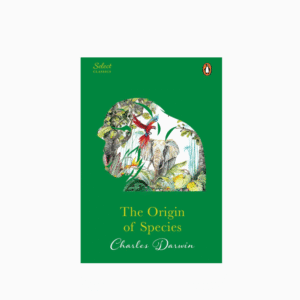
“It is not the strongest of the species that survives, nor the most intelligent that survives. It is the one most responsive to change.”For the longest period, society believed that all beings were created at once over a short span of time. Up until Charles Darwin introduced the theory of evolution and argued that living beings as they function today have developed through the process of natural selection, challenging conventional beliefs about the origins of life.This theory is driven by the differential survival and reproduction of individuals with advantageous traits. The offsprings which acquire stronger traits through genetics, will have a higher chance of adapting to the changing environment.Darwin’s theory suggests that all species, including humans, share a common ancestry, providing a unifying framework for the diversity of life on Earth.An absolutely engaging and enlightening read to understand the human body and be more in sync with how we can utilize our physical abilities to adapt to the world’s changing requirements.
BOOK SUMMARY
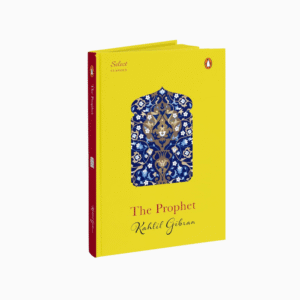
‘‘Your joy is your sorrow unmasked. And the self-same well from which your laughter rises were often times filled with your tears” When a messiah, the source of infinite wisdom, comes to the fictional town of Orphalese, the people take it as a sign to get their deepest concerns answered. Here was a man who you could tell, “I’ve been jealous”, “I worry about money”, “I cry a lot”, “marriage is difficult for me”, “I feel life is unfair at times”, and not be judged. Written as a conversation between Almustafa, the prophet, and people of Orphalese, together they explore what spirituality, freedom, family, ambition, failures, success means to everyone. The Prophet is a highly moving and thoughtful reading experience, like a compassionate friend gently holding your hand through uncomfortable paths of life. Written in a simple yet lyrical way, it brings a sense of soothing and catharsis to the reader. A timeless philosophical work that offers guidance and pearls of wisdom.
Librarian’s note: There is an Alternate Cover Edition for this edition of this book here.
A farm is taken over by its overworked, mistreated animals. With flaming idealism and stirring slogans, they set out to create a paradise of progress, justice, and equality. Thus the stage is set for one of the most telling satiric fables ever penned –a razor-edged fairy tale for grown-ups that records the evolution from revolution against tyranny to a totalitarianism just as terrible.
When Animal Farm was first published, Stalinist Russia was seen as its target. Today it is devastatingly clear that wherever and whenever freedom is attacked, under whatever banner, the cutting clarity and savage comedy of George Orwell’s masterpiece have a meaning and message still ferociously fresh.
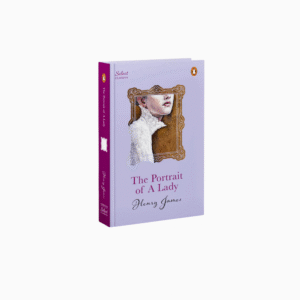
Set in 19th century, Isabel Archer is a spirited, intelligent and independent young American woman who inherits a fortune and embarks on a journey to Europe.
She always believed she’d live life on her own terms and ‘affront her destiny.’ However, during her travel, she realizes that an enduring relationship and a woman’s sense of self don’t go hand in hand. She had various encounters with suitors and manipulative individuals, including the enigmatic and cunning Gilbert Osmond, which challenged her idealistic notions. Isabel though stood fast on her believes and always chose herself first.
Through Isabel’s story we are compelled to wonder, should love to be this complicated? And more importantly, why are women, who are layered and complexed individuals, reduced to such singular roles?
The Portrait of a Lady is a deeply moving, romantic and sensitive story reflecting complex human emotions which will resonate with all readers alike
« He who climbs upon the highest mountains laughs at all tragedies, real or imaginary.”
In this philosophical masterpiece, Zarathustra a fictional sage descends from the mountains to share his wisdom with humanity. He challenges conventional thought and explores profound themes of self-overcoming, the will to power, and the nature of existence.
The character of Zarathustra serves as a mouthpiece for Nietzsche’s philosophical ideas, challenging readers to question their beliefs and embrace a more individualistic and self-directed approach to existence. His journey from solitude in the mountains to engagement with humanity symbolizes the philosopher’s quest to achieve the will to power, and the rejection of herd mentality.
Nietzsche’s emphasis on the individual’s potential for self-mastery and creative self-expression resonates throughout Zarathustra’s teachings. It’s an uplifting and motivational read which helps enhance confidence in oneself, leadership skills and focus.
‘Nowadays people know the price of everything and the value of nothing.’
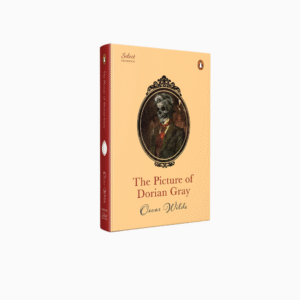
When Dorian Gray, a handsome man is made aware of his exceptional beauty, it brings out his desire to freeze his looks. Dorian Gray sees a portrait of himself made by his close friend and on seeing that he decides to trade his soul, that which differentiates between moral and immoral, for unageing beauty.
As is often said, “beauty is as beauty does”; but what happens when Dorian loses the ability to choose moral actions and leads a life of amoral choices, seeking only to fulfil his desires; ensuring that his actions hurt everyone around him.
Will he still be beautiful, or will the portrait show another picture to the world? One with every sin displayed across the canvas.
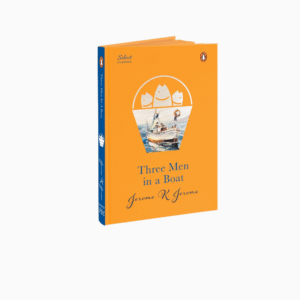
And with the cooperation of several hampers of food and a covered boat, the three men (not forgetting the dog) set out on a hilarious voyage of mishaps up the Thames. When not falling in the river and getting lost in Hampton Court Maze, Jerome K. Jerome finds time to express his ideas on the world around – many of which have acquired a deeper fascination since the day at the end of the 19th century when this excursion was so lightly undertaken.
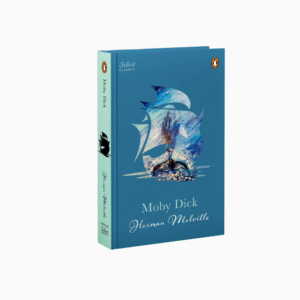
On a previous voyage, a mysterious white whale had ripped off the leg of a sea captain named Ahab. Now the crew of the Pequod, on a pursuit that features constant adventure and horrendous mishaps, must follow the mad Ahab into the abyss to satisfy his unslakeable thirst for vengeance. Narrated by the cunningly observant crew member Ishmael, Moby-Dick is the tale of the hunt for the elusive, omnipotent, and ultimately mystifying white whale—Moby Dick. On its surface, Moby-Dick is a vivid documentary of life aboard a nineteenth-century whaler, a virtual encyclopedia of whales and whaling, replete with facts, legends, and trivia that Melville had gleaned from personal experience and scores of sources. But as the quest for the whale becomes increasingly perilous, the tale works on allegorical levels, likening the whale to human greed, moral consequence, good, evil, and life itself. Who is good? The great white whale who, like Nature, asks nothing but to be left in peace? Or the bold Ahab who, like scientists, explorers, and philosophers, fearlessly probes the mysteries of the universe? Who is evil? The ferocious, man-killing sea monster? Or the revenge-obsessed madman who ignores his own better nature in his quest to kill the beast? Scorned by critics upon its publication, Moby-Dick was publicly derided during its author’s lifetime. Yet Melville’s masterpiece has outlived its initial misunderstanding to become an American classic of unquestionably epic proportions.
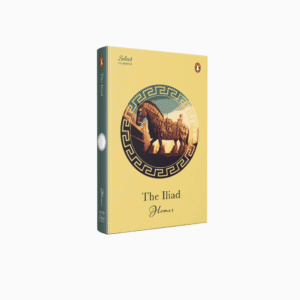
Often considered the first great book of literature, The Illiad is an epic poem which set the stage for all larger-than-life dramas the creative world has since witnessed.
It tells the story of the darkest episode of the most retold Trojan War. It’s an epic poem, with beautiful lyrical tone, set around an eternal love story, an eternal friendship, and an eternal enmity.
At the centre of the story is Achilles, the greatest warrior-champion of the Greeks, the great principled and morally upright King Priam offering valuable insights to life, the beautiful Helen and all the mistakes one makes in love, war, and life.
The Illiad is a must read for all fond of beautifully strung words that pull at heart strings with a deep sense of catharsis
Afin de vous offrir une expérience d’achat personnalisée, notre site utilise des cookies. En continuant à naviguer sur ce site, vous acceptez notre utilisation des cookies.







 Nous contacter sur WhatsApp